SWEATSHOPS STILL EXSIST TODAY.
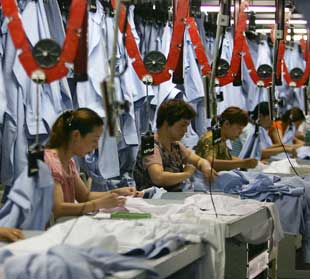
photo from www.inthesetimes.com
Welcome to Call to End Sweatshops! We are a group of high school students who recently found out about the use of sweatshops in the manufacture of American goods. We wanted to do something about it, and so we have arranged Call to End Sweatshops Day. On Monday February 25th, 2008, we are asking for people to call our country's senators to request change in the issue of sweatshops. We believe that closing factories overseas is not the answer, but we want the conditions to be fair and healthy with living wages where our goods are produced. We want our voices to be heard on this issue, and we know that the more people we can get to call, the bigger impact this will have. Calling is a way for you to get involved and make a change in our world. Specifically, we believe we'll be able to make a change on getting Senators to support the legislation S.367, a bill that will make conditions fair and just in sweatshops. Even if you're not usually one to get involved with politics, this is something you should get involved it, because we believe it is a moral issue about basic human dignity, not a political issue.
On our blog, you will find an FAQ section about what's going on in sweatshops, a sample script and tips for calling, and the phone numbers for our political leaders. Please be sure to visit the FAQS section before deciding to call, so that you know exactly what you're calling about. Make sure to mark the date on your calendar so you don't forget! Thank you for taking the time to visit and for caring about this issue!

photo from Betsy Murphy
THE PHONECALL
Calling shouldn't take you any longer than 20 minutes or so if you call five Senators.
Remember to:
-Be respectful and polite--anger never helps anything.
-Be short and to the point.
-Call as many elected officials as you can. The most effective people to call would be the Senators on the committee deciding if this bill will even be voted on by the rest of the Senate. This committee is made up of 21 Senators whose names you can find under the "phone numbers" section and we would recommend calling them first, and of course, call the Senators that represent your state also.
-You can just read the sample script over the phone, or you can say what you want, asking officials to take action against sweatshops and support bill S.367. Remember, you must be specific. Don't just say "I think sweatshops are bad." State exactly what is wrong with them, and a plan for change. Asking senators to support S.367 is MUCH more effective than just being vague.

SAMPLE SCRIPT
"Hi, my name is________from______and I am calling to urge Senator _________(political leader's name) to take action to end unfair conditions in sweatshops used in the manufacture of American goods, and support the Bill S.367, Decent Working Conditions and Fair Competition Act. I would like________(Senator's name) to promote and support bill S.367 to end the mistreatment of workers in sweatshops. This bill is not asking to end sweatshops, but to grant laborers basic human dignity and just treatment. I support it, and hope that_______(Senator's name) will too. Thank you very much for your time.

photo from Tamara
PHONE NUMBERS
The numbers for the 21 Senators on the committee deciding if this will even go into the rest of Senate to be voted on by all of the Senators are listed below.
Daniel K. Inouye--Hawaii, (202) 224-3934
John D. Rockefeller--West Virginia, (202) 224-6472
John F. Kerry--Massachusetts, (202) 224-2724
John McCain--Arizona (202) 224-2235
Kay Bailey Hutchinson--Texas (202) 224-0776
Olympia J. Snowe--Maine (202) 224-5344
Bryon L. Dorgan--North Dakota (202) 224-2551
Barbara Boxer--California, (202) 224-3553
Bill Nelson--Florida (202) 224-5374
John Ensign--Nevada (202) 224-6244
John E. Sununu--New Hampshire (202) 224-2841
Jim DeMint--South Carolina (202) 224-6121
Maria Cantwell--Washington (202) 224-3441
Frank R. Lautenberg--New Jersey (202) 228-4054
Mark Pryor--Arkansas (202) 224-2353
Thomas Carper--Deleware (202) 224-2441
Claire McCaskill--Missouri (202) 224-6154
Amy Klobuchar--Minnesota, (202) 224-3244
David Vitter--Lousiana (202) 224-4623
John Thune--South Dakota (202) 224-2321
Roger Wicker--Mississippi (202)224-6253
To find the phone number for your state Senators, visit http://www.visi.com/juan/congress/index.html and click on your state.

photo from Rain and the Rhinoceros.

photo from fairlabor.org
FAQS
What's going on?
Thousands of US companies use sweatshops in the manufacture of their goods. Gap, Nike, Abercrombie, Levi Strauss, Wal-Mart, Disney, Kohls, Target, Victoria's Secret, Bebe, Guess? Ralph Lauren, and hundreds of other oppress and terribly mistreat their workers in sweatshops. If something was made overseas, there's a very good chance that it was made in a sweatshop.
What is a sweatshop?
A sweatshop is a place where goods are made by workers laboring in harmful conditions where they are paid little or nothing for their work, are subject to unpaid overtimes, physical, verbal, or sexual abuse, and are not allowed to form Unions. According to the Department of Labor, "a sweatshop is a place that breaks two or more basic labor laws including minimum wage, overtime, child labor, and fire safety laws. " Sweatshops are located all over the world, including some here in the US, and are used in the manufacture of goods such as clothing, electronics, sports gear, and many other basic items.
Why does this apply to me?
In buying clothes and goods produced in sweatshops, we are supporting the unjust treatment of workers in sweatshops. We don't want to do this. Many workers in sweatshops are poverty stricken people in desperate need of a job to support themselves and their families. When they go to work for sweatshops, many enter into virtual slavery and mistreatment with not enough pay to even live on, leading them deeper into the pit of poverty. When we buy clothing made by companies who use sweatshops, we have a hand in the oppression and mistreatment of these people even without knowing it. It is our job to be the voice for the sweatshop worker whose voice has been silenced. It is our job to refuse to support the mistreatment of these people, and work for their freedom and justice.
What is the Decent Working Conditions and Fair Competition Act S. 367?
This is a bill introduced in the Senate that will basically grant sweatshop workers safe conditions, minimum ages for child employees, acceptable hours of work, and the right to form unions and congregate. This Act will prohibit the sale, manufacture, or trade of goods made in sweatshops. This is a very good thing, and we believe it is exactly what is needed to keep our fellow human being safe and healthy while manufacturing things for us. The bill won't outlaw overseas manufacture of goods, it will just make conditions healthy and good for workers. If you would like to read the entire bill itself, you can visit http://www.thomas.gov/cgi-bin/query/D?c110:1:./temp/~c110cmbXww::
What can I do to help end unfair conditions in sweatshops?
Call to End Sweatshops is a blog specifically for calling Senators on February 25, 2008 to ask them to endorse S.367. To get involved with Call to End Sweatshops, you can begin with making some calls yourself. We also really need awareness to be raised about Call to End Sweatshops Day. Posting info about it will a link to our blog on your Facebook, Myspace, or Blog is a great way to get this noticed. You can also tell your friends about it, get people together to call in a group, or send an e-mail out to your contact list asking them to call. The more people that call, the bigger of an impact this will have. Every call is counted and relayed to the Senator.
Aside from calling, you call also write letters to your favorite stores that use sweatshops and ask them to stop, educate your friends and family about this issue, and even if you miss the February 25 calling day, it's never too late to call or send a letter asking for this bill to be supported.
Won't getting rid of sweatshops ruin our economy and other country's economies?
We want to be clear in saying that we don't want to end overseas manufacture. Countries outside of the United States need our business, and when done the right way, factories can help boost the economies of struggling countries, and offer many jobs to poverty-stricken people. However, what we are asking is that these workers would be treated with respect, be free from the worry of violence on the job, and given a living wage. A living wage doesn't mean payment up to American standards...it means enough money to live on and have most basic needs taken care of such as food and shelter. In Bangalore India, a living wage is only about $35 USD a month. We're not asking for these overseas factories to close, in fact, we definitely want them to stay open because they are very much needed by American consumers and overseas manufacturers. What we are asking for is just, fair treatment and living wages for these people. This will help, not hurt economies.
Where can I find out more about sweatshops?
Here are some great websites that have helped us:
http://www.coopamerica.org/programs/sweatshops/
http://sweatshopwatch.org/
http://www.globalexchange.org/campaigns.org/campaigns/sweatshops
http://heartsandminds.org/articles/sweat.htm
Thanks so much for stopping by!

photo from Center for Study of Working Class Life

No comments:
Post a Comment